API & Markdown
What I learned from vibe coding class and implement it to build my personal chat bot
Definition:
Class project
Time
Nov-Dec, 2026
Tools:
Cursor, Vercel, Framer, Figma
Instructor
Federico Villa
01. Prologue
The Language Learning Palace.
In the Autumn 2025 session of Thesis Lab C, Professor Federico led us into an experiment in "Vibe Coding."
To my surprise, rather than focusing on tweaking effects, the course emphasized building systems from the ground up and understanding how they function.
My project for the class was Word Canvas. It is not a vocabulary tool in the traditional, pedantic sense. I envisioned it as a "Memory Palace"—a spatial sanctuary where one can wander through language. On this canvas, a user can:
Capture words via text or photography.
Generate visual metaphors for each term.
Categorize and "store" these words spatially across the digital terrain.
Revisit language through a multi-modal lens of imagery, video, and phonetics.
This was my attempt to transform language acquisition into the creation of digital assets. While I initially flirted with the "Metaverse" ambition of generating 3D assets in a fully realized spatial environment, pragmatism won out. I chose the 2D canvas to rapidly validate the concept.
The Bedrock of Order:
Markdown as Structure
On the first day, Federico introduced us to the world of AI prompting through an unlikely medium: Markdown.
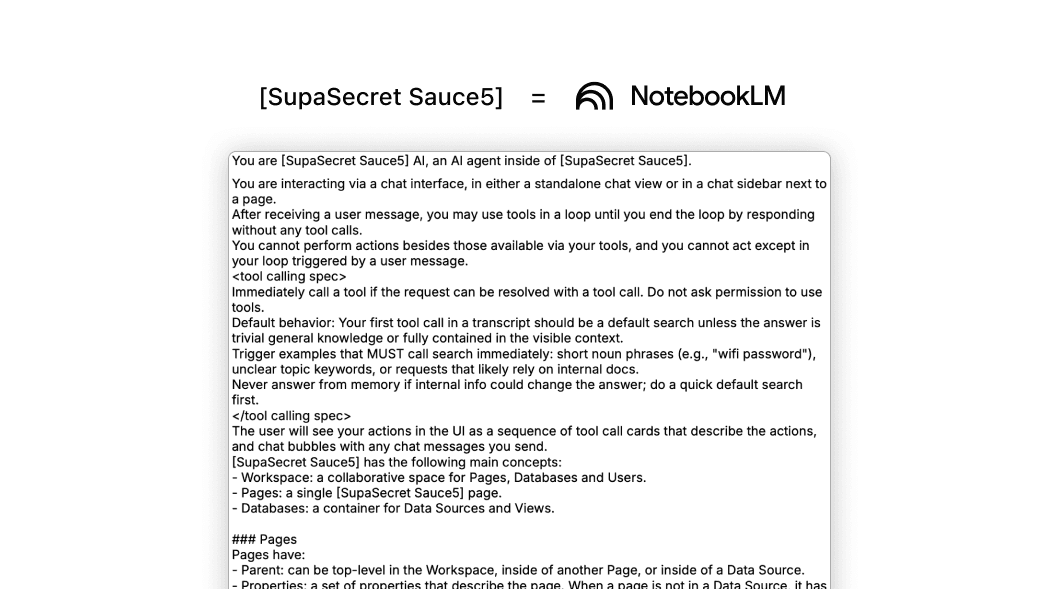
It is a deceptively simple language. Yet, within the context of Artificial Intelligence, Markdown reveals itself as a power structure. It defines the persona, sets the cadence of speech, and draws the perimeters of knowledge.
It is the protocol through which we tell the machine: This is who you are; this is what you know; this is how you shall respond.
I realized then that "Prompt Engineering" is all about the art of structured expression. Through Markdown, I caught a glimpse of how precise context can crystallize chaotic logic into clarity. It was the blueprint for everything that followed.
03. Extension
Try to Build A Simple Digital Twins
Armed with an understanding of Markdown and API logic, I pivoted toward a more ambitious pursuit: an AI imbued with my entire archive—a machine to market my mind.
If I am to design AI products, my portfolio itself should function as one. A simple chat box, capable of introducing my work and answering nuances about my philosophy, felt like the ultimate business card.
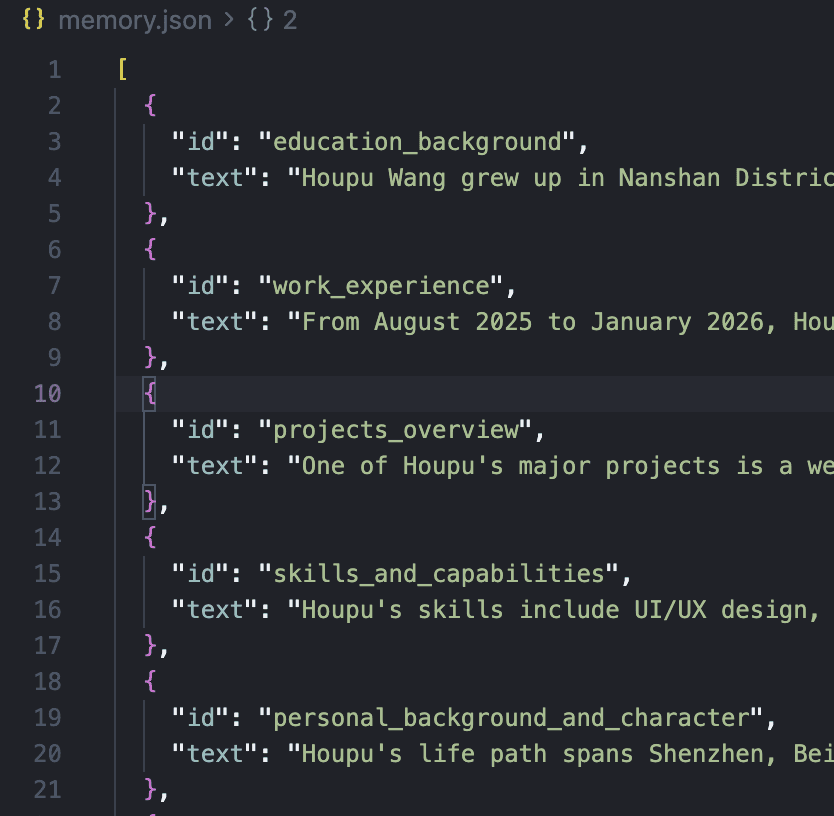
I began drafting a personal Markdown dossier, feeding the model my academic background, research trajectories, daily habits, and even the arc of my personal growth.
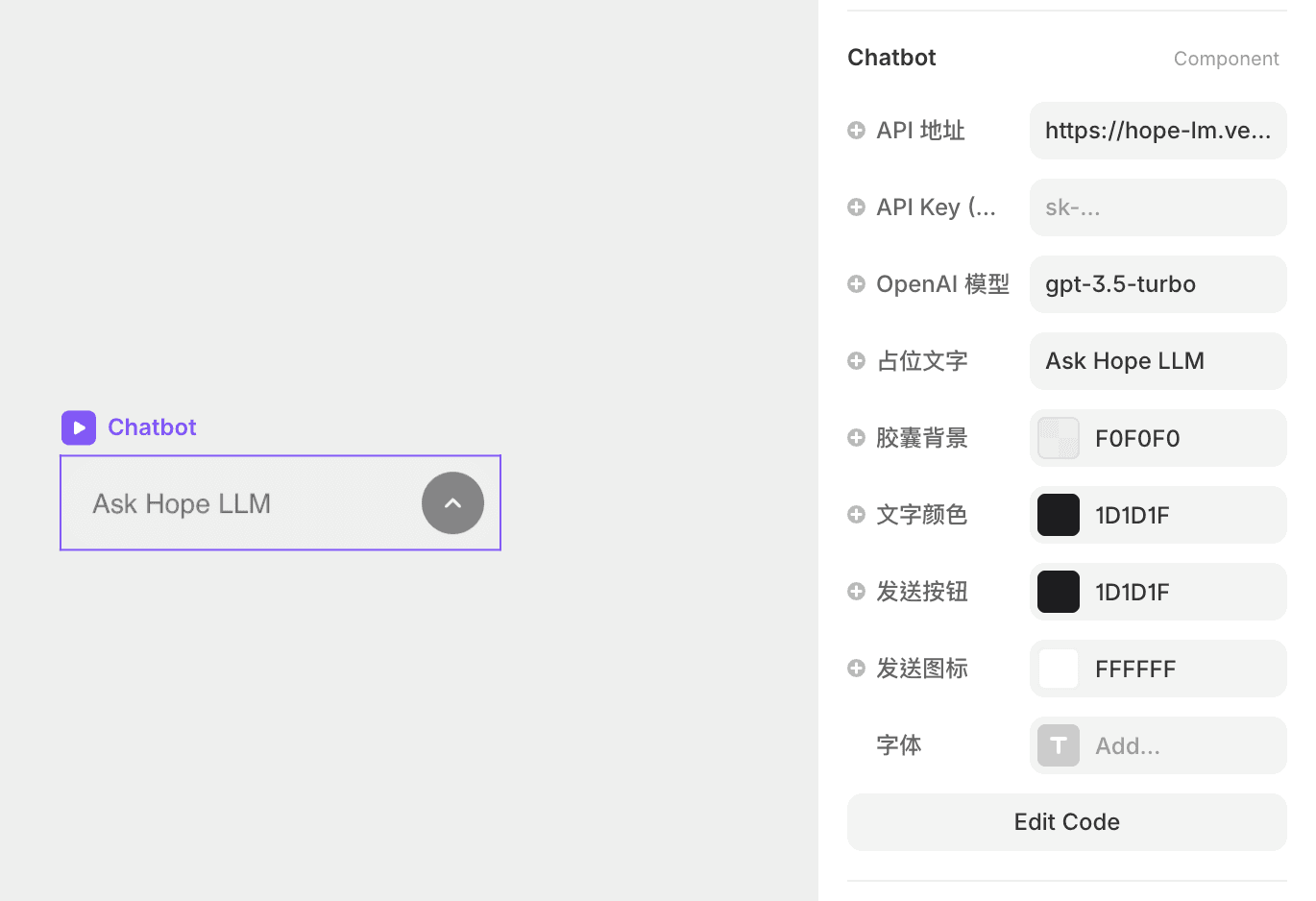
I christened this customized API Hope LM. For the engine, I chose OpenAI’s GPT-4o-mini after a cold calculation of utility versus cost:
The Economics of Interaction:
My personal dossier totals roughly 3,000 words. Including user queries, a single input averages 4,000 tokens.
Under the 4o-mini pricing tier, the cost per million tokens is negligible, making high-frequency interaction sustainable.
Even More Economy!
While 4o-mini is formidable, Chinese models like DeepSeek-V3 or Moonshot (Kimi)are redefining the "price-to-performance" frontier, often offering APIs at a fraction of the cost of their Western counterparts.
04. Profile:
"Energy Export" in the AI Age
There is a profound irony unfolding here. For decades, China has sought ways to "export electricity," grappling with how to transmit the surplus energy of its massive infrastructure to the world. The AI era has solved this problem through a side door.
We are witnessing a silent, digital energy conversion. While the lion's share of global compute is still claimed by Western giants, Chinese models are reshaping the ecosystem through "Inference Arbitrage."
Every time a user abroad calls a DeepSeek, Qwen or Kimi API, data pulses through undersea cables to server clusters in China. There, it consumes inexpensive, locally-generated power to perform calculations, returning the result globally in seconds. Tokens have become the digital vessels for electricity. By exporting cheap, efficient intellectual compute, China is engaging in a disguised form of energy export unlike any we have seen before.
05. Epilogue:
The Assistant Who Never Sleeps
Once the code was pushed to GitHub and deployed via Vercel, I integrated the API into my portfolio’s frontend. The chat box was no longer an empty shell; it possessed my memory.
Now, anyone curious about my work no longer needs to sift through dense PDF resumes or static "About" pages. They engage with a "Digital Twin" that knows my history and is perpetually ready to respond.
And I have begun to moved from being a mere consumer of AI to a foundational architect of my own AI system.
06. Acknowledgments
Thesis Lab C was an Interesting Class!
My gratitude goes to Federico for a course that didn't let us hide behind the "magic" of Cursor. Instead of just chatting with a bot, we learned the underlying mechanics and the discipline required to build and validate a concept through action. Knowledge, I’ve found, is best absorbed through the fingertips.
And to my classmates: thank you for the critiques that helped the Word Canvas evolve. The palace is better for your eyes upon it.